Free delivery on orders over £35
|
Beautiful Nails, Beautiful Savings
|
Fresh nail designs every week!
|
|
Free delivery on orders over £35
|
Beautiful Nails, Beautiful Savings
|
Fresh nail designs every week!
|
|
Choose what you are happy for us to use. Essential cookies keep the shop working, so they stay on.
Needed to run the shop: your basket, secure checkout, your login, fraud prevention and remembering this cookie choice. These cannot be switched off.
Remembers how you like the site to look and behave — recently viewed shades, your wishlist and display settings. Nothing here is based on your interests or used for advertising.
On by default for this purpose. Switch it off and we will stop.
Helps us count visits and see which pages and products people struggle with, so we can improve the shop. We use Google Analytics for this.
Lets us show you our ads on Google, Meta and other sites, and measure whether those ads led to an order. This involves sharing data with those companies.
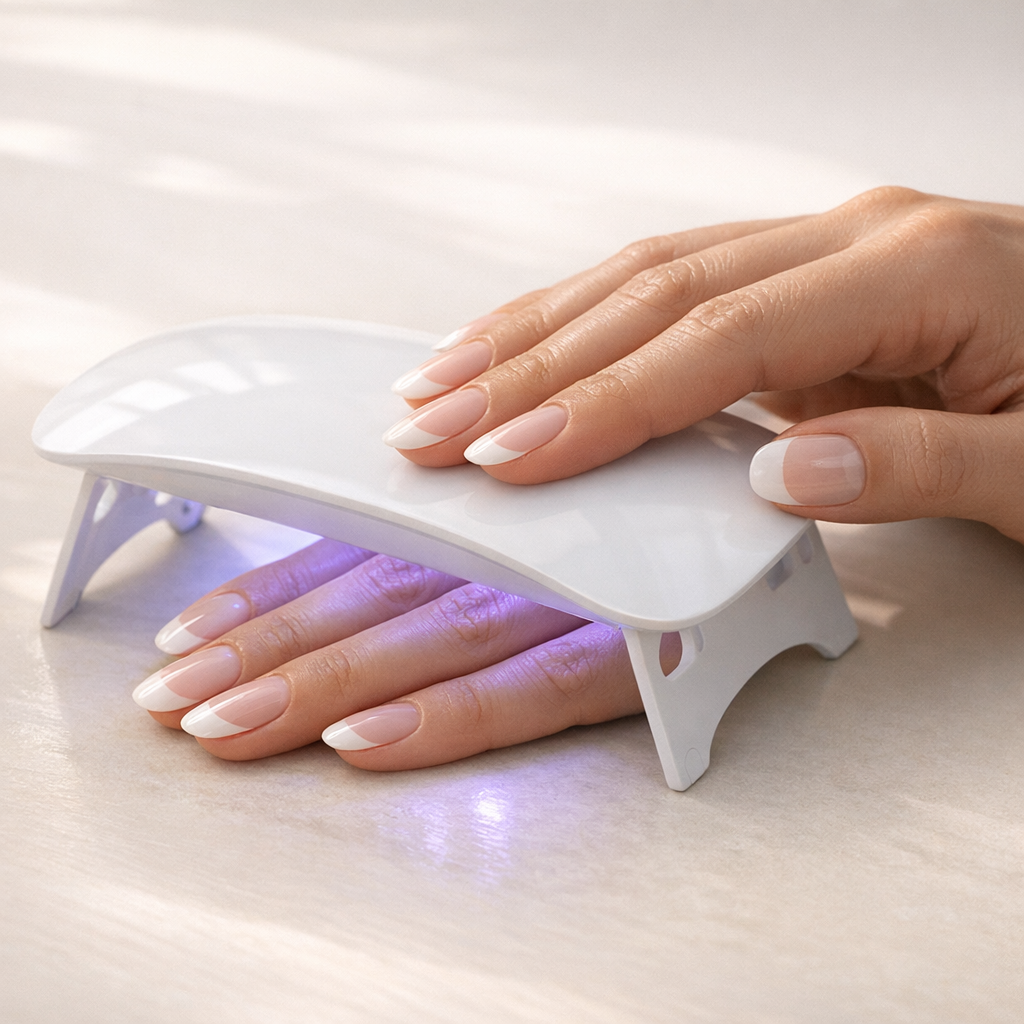
Do gel nail strips need a UV lamp? If you’re using semi-cured gel nail strips (like Velvora’s), the answer is yes: you’ll get the proper cure, hardness and long wear by finishing with a UV/LED lamp. If you’re using standard nail polish strips, the answer is no—they air-dry and don’t need curing.
If you want an easy, salon-style finish at home, start with Velvora’s gel nail strips starter kit and you’ll have everything you need in one go. Or shop now to browse designs and build your own set.
Yes—semi-cured gel nail strips need a UV/LED lamp to cure properly. The strips are partially cured in manufacturing, then you complete the cure on your nails so they harden, seal to the nail plate and resist dents and lifting.
In our experience, most first-time users get a salon-quality finish within 10 minutes once they’ve done good prep and a proper cure. One thing we hear from customers time and again is that skipping the lamp is the quickest way to end up with “bendy” tips or hair-catching edges.
For Velvora users, your best starting point is the gel nail strips collection—every set includes 20 strips in multiple sizes so you can get a neat fit across different nail shapes.
The lamp triggers polymerisation—turning the semi-cured gel from “mouldable” to “set”. That’s what gives you the firm, glossy finish and the wear you’re expecting.
Semi-cured gel contains light-reactive ingredients (photoinitiators). When exposed to the right UV/LED wavelength, they start a chain reaction that links the gel molecules together into a tougher network. In plain English: the lamp is what makes them feel like gel, not like a sticker.
If you’re choosing a lamp, use a proper nail UV/LED lamp designed for curing gel products. Velvora’s guide explains what to look for, timings, and setup: UV/LED lamp guide for curing gel nail strips.
Most modern “UV” nail lamps are actually UV/LED hybrid lamps, and they’re ideal for semi-cured gel strips. The key is consistent output and the right wavelength range so the strip cures evenly.
Our community of Velvora fans often shares that the biggest upgrade is not “more power” but more consistent curing. A stable lamp helps prevent that half-cured feel at the tips, which is where most wear happens.
If you don’t already have one, browse the UV LED lamp accessories alongside your strips.
For the best wear, prep well, fit precisely, and cure in a full lamp session—then do a quick second cure if needed. Small technique tweaks make a bigger difference than people expect.
If you’re unsure about sizing, follow Velvora’s nail sizing guide. After testing across hundreds of nail shapes and sizes, we’ve found that correct sizing reduces lifting more than any “extra cure time” trick.
Cuticle oil doesn’t just make your nails look glossy—it keeps the skin flexible, which can reduce edge lifting over time. For a daily, no-mess option, we love the Watermelon cuticle oil pen.
For a deeper aftercare routine, Velvora’s guide is a great bookmark: how to use cuticle oil after gel strips.
Ready to pick a style and try the routine? Shop French tip gel nail strips for a clean, everyday look that suits all nail lengths.
No—nail polish strips do not need a UV lamp. They’re made from real nail polish that’s already dried into a flexible film, so you simply apply, press, and file.
If you want the quickest no-lamp option for travel or beginners, explore nail polish strips. You’ll still want good prep and neat edges, but curing isn’t part of the process.
When you’re ready to step up to the gel finish, semi-cured gel strips plus a proper cure will usually give longer wear and a tougher surface.
Used correctly, UV/LED curing is widely used in nail services and is considered safe for most people, but you should always follow instructions and patch-test if you’re sensitive. If you have a nail condition, allergies, or concerns during pregnancy, it’s sensible to speak with a healthcare professional.
Velvora products are 100% vegan, cruelty-free, 14-Free, HEMA-Free, pregnancy safe, and fully UK/EU compliant (including CPNP registration and REACH certification). They’re made in certified facilities and produced with Japanese blade technology for consistent fit and clean edges.
For ingredient and compliance details, see Velvora’s product safety and ingredients information.
For a general health reference on nail care and common nail concerns, you can also read NHS guidance on brittle nails.
Velvora is built for people who want salon-looking nails at home, without the faff—and without compromising on safer formulation choices. Our goal is straightforward: make at-home gel feel approachable for beginners, but reliable enough for regular wearers.
If you do your nails often, our regulars love the convenience of deliveries on a schedule via the subscription options—handy when you like switching designs with the seasons.
To get started today, browse the full collection and shop now.
Semi-cured gel nail strips do need a UV/LED lamp to finish curing. Without curing, the strips stay softer and won’t reach their full strength or expected wear time.
You can apply them, but they won’t properly set. In practice, uncured semi-cured gel strips are more likely to dent, lift at the edges, and catch hair, so we don’t recommend skipping the lamp.
No. Nail polish strips are made from real dried polish and don’t require curing. You apply them to clean nails, press down well, then file to shape.
Most people cure for around 60 seconds per hand with a suitable UV/LED nail lamp, but exact timing depends on your lamp. If tips still feel flexible, do a second short cure and make sure your thumb is fully exposed.
Many people use UV/LED-cured nail products without issue, but sensitivities can happen with any cosmetic. Choose HEMA-Free options if you’re cautious, avoid getting product on skin, and stop using if irritation occurs.
Yes. Each Velvora set includes 20 strips in a range of sizes to fit different nail shapes. For the best results, choose a size that doesn’t overlap your skin, then press and cure carefully around the edges.
If you’d like more step-by-step help, this tutorial is a handy next read: how to apply gel nail strips like a pro. When you’re ready, find your perfect shade and shop now.

No account yet?
Create an Account