Free delivery on orders over £35
|
Beautiful Nails, Beautiful Savings
|
Fresh nail designs every week!
|
|
Free delivery on orders over £35
|
Beautiful Nails, Beautiful Savings
|
Fresh nail designs every week!
|
|
Choose what you are happy for us to use. Essential cookies keep the shop working, so they stay on.
Needed to run the shop: your basket, secure checkout, your login, fraud prevention and remembering this cookie choice. These cannot be switched off.
Remembers how you like the site to look and behave — recently viewed shades, your wishlist and display settings. Nothing here is based on your interests or used for advertising.
On by default for this purpose. Switch it off and we will stop.
Helps us count visits and see which pages and products people struggle with, so we can improve the shop. We use Google Analytics for this.
Lets us show you our ads on Google, Meta and other sites, and measure whether those ads led to an order. This involves sharing data with those companies.
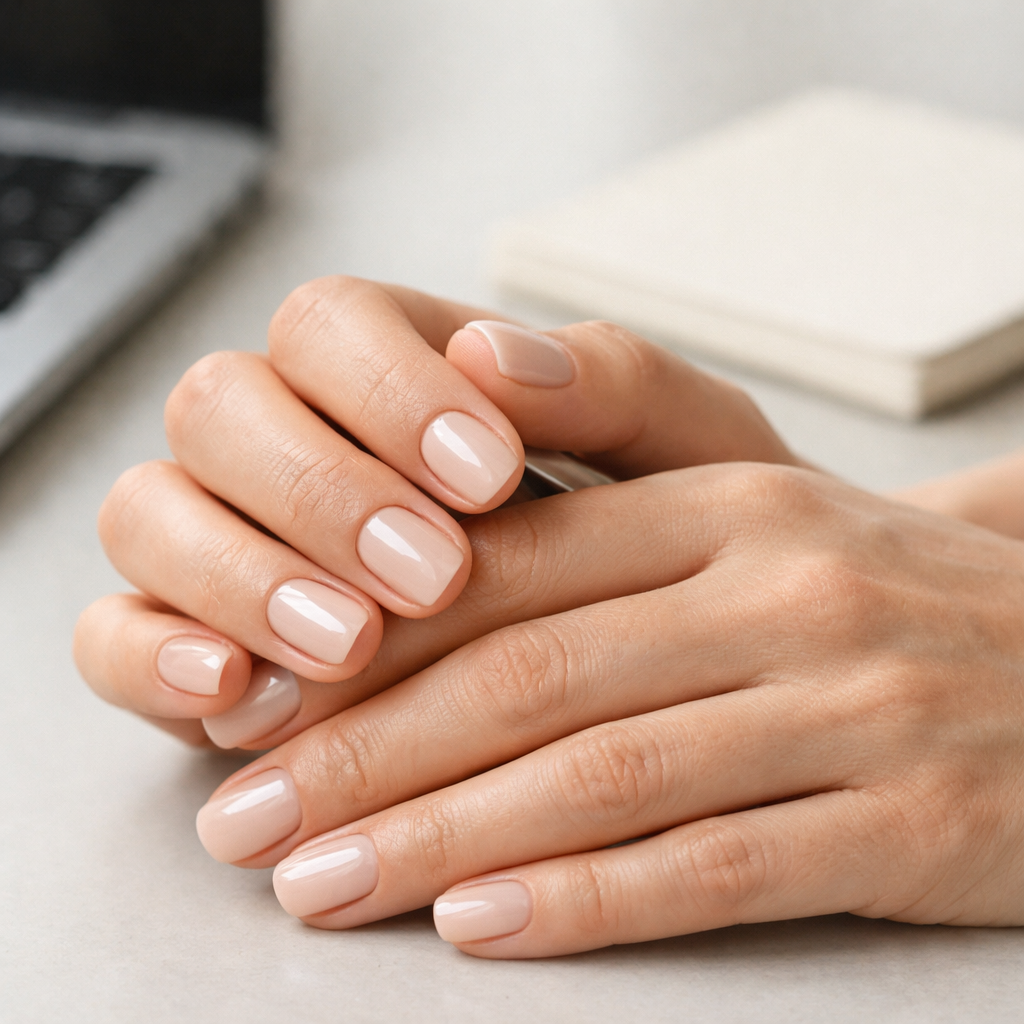
Is gel polish bad for your nails? It can be — but usually it’s the process (over-buffing, harsh acetone soaks, and peeling) rather than gel itself that leaves nails thin, sore, or flaky. If you love the glossy look but want a gentler routine, semi-cured gel nail strips can give you a similar finish with less filing and simpler removal.
If you’re weighing up salon gel, DIY gel, or at-home alternatives, this guide breaks down what actually causes damage, what’s normal after a few gel sets, and how to keep nails strong in the UK climate (hello, cold hands + central heating).
Browse the full Velvora collection and shop now if you want a salon-gloss look with an at-home routine designed to be kinder to nails.
Gel polish can be bad for your nails if it’s applied or removed in a way that stresses the nail plate (the hard keratin you can see). The most common culprits are heavy buffing, picking/peeling, and acetone exposure for long periods.
In our experience testing at-home nail methods, most “gel damage” stories start with one of these scenarios: the nail was filed too aggressively to “help it stick”, the gel was peeled off when it lifted, or removal was rushed with scraping. The good news is that nail plates can recover with time and consistent aftercare.
Traditional gel polish is a liquid system that cures into a hard coating under UV/LED light. It’s designed to bond strongly, which is great for wear time but means removal needs patience. If you force it off, you can take layers of your natural nail with it.
The biggest reason gel feels “bad” for nails is that removal can be harsh when it’s done too fast. Even a perfect gel manicure can go wrong at the end if you’re scraping or peeling.
Some technicians (and DIY kits) rely on heavy buffing to make nails ultra-matte. A light de-shine is one thing; repeated aggressive buffing removes protective layers and can leave nails thin over time.
One thing we hear from customers time and again is: “I only peeled one nail… then they all went.” Peeling gel polish (or any bonded coating) tends to pull up keratin layers, which is why nails can feel papery afterwards.
Acetone is effective, but it’s also dehydrating. If you soak for ages, then scrape hard to “help it along”, nails and surrounding skin can feel dry and irritated. If you’ve ever had white, chalky patches after removal, that’s often dehydration plus surface disruption.
Some gel systems contain ingredients that can trigger irritation or allergic contact dermatitis in sensitive users, especially if product touches the skin. If you notice persistent redness, itching, swelling, or blistering around the nails, stop using the product and seek medical advice.
For a general overview of nail health and common nail problems, see the NHS guidance on nails.
For many people, semi-cured gel nail strips are a gentler option because you can get a glossy, gel-like finish with less liquid chemistry on the nail and typically less aggressive removal. You still need good prep, but you’re not painting multiple wet layers onto the nail plate.
Velvora specialises in semi-cured gel nail strips that cure under UV/LED light and are designed for an at-home routine. Each set includes 20 strips in multiple sizes, so you can find a close match for most nail shapes without excessive stretching.
| Feature | Traditional gel polish | Semi-cured gel nail strips |
|---|---|---|
| Application | Base + colour + top, careful curing each layer | Stick on, trim, then cure |
| Prep | Often includes buffing + dehydrator/primer | Clean, dry nails; minimal buffing if needed |
| Removal risk | Higher if you scrape/peel | Lower when removed slowly and properly |
| Best for | Experienced users or salon regulars | Beginners who want a gel finish at home |
| Wear time | Often up to 2–3 weeks depending on growth | Commonly up to 2 weeks with good prep |
If you’re new to strips, our Velvora Gel Nail Strips Starter Kit is the easiest way to get everything you need in one go. In our experience, most first-time users get a salon-quality finish within about 10 minutes once they’ve done it once or twice.
You can keep nails healthy with gel polish by minimising mechanical damage, keeping skin hydrated, and giving nails occasional breaks if they’re feeling thin. Small habit changes make a bigger difference than “miracle strengtheners”.
Hydration helps nails flex without splitting, especially in winter heating or after lots of hand sanitiser. We recommend oiling daily (and after each hand wash if your hands run dry).
A customer favourite is the Vanilla Cuticle Oil Pen because it’s handbag-friendly and easy to use without mess. For a fruity option, the Watermelon Cuticle Oil Pen is another go-to in our community.
If you want a simple routine, follow our guide on how to use cuticle oil for nail aftercare.
Whether you’re removing gel polish or semi-cured strips, the goal is the same: soften the bond and lift product off without scraping layers of nail. If you’re using strips, use a proper method rather than peeling when you’re in a rush.
For step-by-step help, see how to remove gel nail strips safely.
If your nails feel tender after gel, choose looks that don’t require lots of filing and still give you that “fresh set” confidence. Semi-cured strips are great for this because you can keep things sleek and simple while you rebuild nail strength.
When nails are recovering, we find that simple shades are easier to fit and finish neatly (especially around the cuticle). Start with the solid colour gel nail strips collection for a minimal, glossy look that works for everyday.
If you’re the type who picks at lifting edges (no judgement), a subscription can help you stick to a routine: apply, enjoy, remove properly, repeat. Velvora offers a curated box via the 2x gel strips monthly subscription so you always have a fresh set ready, rather than trying to stretch a manicure past its best.
Mid-article tip: If your nails are peeling, keep length short for a few weeks and oil twice daily. Let strength come back before you chase long extensions again.
Find your next set of gel nail strips and build a healthier wear-and-care rhythm.
Velvora is designed for people who want salon-style nails at home without unnecessary nasties or guesswork. While no cosmetic is “risk free” for every single person, our approach is built around transparency, compliance, and kinder day-to-day use.
If you want to see the details, read our product safety and ingredients information.
For many customers, the win is consistency: once you learn your sizing and prep, you can get a reliable finish at home without booking appointments. If you’re curious what other UK users think, you can also browse our reviews on the site.
Gel polish can be bad for nails long-term if each manicure involves heavy buffing, repeated acetone soaks, and scraping or peeling during removal. With gentle prep, careful application, and slow removal, many people wear gel without long-term thinning.
Weakness after gel is usually from over-buffing (removing surface layers), peeling gel off, or aggressive scraping during removal. Nails can also feel weaker simply because they’re dehydrated after acetone. Daily cuticle oil and keeping nails short helps while they recover.
UV/LED lamps cure gel by triggering photoinitiators that harden the product. Used as directed, exposure is brief, but if you’re concerned you can apply SPF to hands (avoiding the nail plate) or wear UV gloves with the fingertips cut off. Always follow curing times to avoid under-curing.
The least damaging option is usually the one you can remove without scraping or peeling. Many people find semi-cured gel nail strips a good middle ground because you still cure for a gel-like finish, but you can avoid layers of wet product and reduce how much filing is needed.
If nails are sore, peeling, or very thin, a 2–4 week break often helps, along with daily oil and gentle filing. If your nails feel fine, you may not need a strict break — focus instead on gentle removal and aftercare each cycle.
Gel nail strips can still cause damage if they’re peeled off forcefully, but they’re often easier to remove gently compared with traditional gel polish. Good prep, correct curing, and slow removal are what keep nails in good condition.
If you want the gel look with a simpler routine, shop now and pick a set that suits your everyday style. If you’re rebuilding nail strength, start with a solid shade and commit to cuticle oil daily for two weeks — your nails will thank you.

No account yet?
Create an Account