Free delivery on orders over £35
|
Beautiful Nails, Beautiful Savings
|
Fresh nail designs every week!
|
|
Free delivery on orders over £35
|
Beautiful Nails, Beautiful Savings
|
Fresh nail designs every week!
|
|
Choose what you are happy for us to use. Essential cookies keep the shop working, so they stay on.
Needed to run the shop: your basket, secure checkout, your login, fraud prevention and remembering this cookie choice. These cannot be switched off.
Remembers how you like the site to look and behave — recently viewed shades, your wishlist and display settings. Nothing here is based on your interests or used for advertising.
On by default for this purpose. Switch it off and we will stop.
Helps us count visits and see which pages and products people struggle with, so we can improve the shop. We use Google Analytics for this.
Lets us show you our ads on Google, Meta and other sites, and measure whether those ads led to an order. This involves sharing data with those companies.
If you’re trying to stop biting nails with gel strips, you’re not alone — and yes, gel strips can help (when you use them in a specific, bite-proof way). In our experience, the biggest difference comes from creating a smooth, sealed edge that feels “not worth biting”, plus giving your hands a quick routine you can repeat when the urge hits. If you want an at-home option that looks polished, feels sturdier than bare nails, and doesn’t rely on harsh formulas, Velvora’s semi-cured sets are a brilliant place to start.
Ready to set yourself up properly? The easiest route is starting with a kit that includes everything you need for a clean cure and a tidy finish. Velvora’s Gel Nail Strips Starter Kit is designed for beginners, and you’ll also find plenty of options if you prefer shopping by design in our gel nail strips collection. If you’re feeling motivated, you can shop now and pick a set that makes you want to show your hands off (instead of hiding them).
Yes — gel strips can help you stop biting by acting as a physical and sensory barrier that makes biting less satisfying and less “automatic”. They also protect the nail edge from tiny tears that normally turn into a chewing invitation.
One thing we hear from customers time and again is that biting starts with a single snag. Semi-cured gel strips can reduce that snaggy feeling, because once cured they form a smooth layer over the nail plate and tip. The result isn’t magic, but it’s practical: fewer triggers, fewer nibbles, and more time for your natural nails to grow.
Semi-cured gel strips are partially cured gel material. After you apply them, you finish the cure under an LED lamp so the polymers cross-link and harden. That cured finish is typically firmer than traditional polish, which can stay slightly flexible and chip at the edges.
The “edge experience” is huge for nail biters. A flexible, chipped edge is tempting. A sealed, smooth edge is boring — and boring is exactly what you want when you’re breaking a habit.
If your biting is driven by anxiety or concentration, gel strips won’t remove the urge on their own. They work best as part of a system: short nails, smooth edges, consistent aftercare, and a quick replacement behaviour for your hands. Think of them as the barrier and the reminder.
To stop biting nails gel strips style, apply them on short nails, seal the free edge properly, and keep the cuticle area hydrated so you’re not picking at dry bits.
After testing across hundreds of nail shapes and sizes, the “bite-proof” application comes down to three things: prep, edge sealing, and aftercare. Here’s the method we’d recommend if you’re actively trying to break biting.
Cut nails down so there’s minimal free edge. For most nail biters, long tips are an instant target. Short nails also help strips fit neatly, with less lifting at the ends.
Gel strips stick best to clean, dry nails. If you touch your nail plates a lot while applying, you reintroduce skin oils and the edges can lift sooner — which can lead to picking, then biting.
If you’re new, follow a step-by-step guide: how to apply gel strips. It’ll keep you on track and help you avoid the most common lifting mistakes.
After curing, file in one direction to shape, then lightly file the very tip to “cap” the edge. This makes the strip feel smoother at the bite point. In our experience, this single step reduces “testing bites” massively.
If strips aren’t fully cured, they can feel slightly rubbery. That texture can be weirdly tempting to bite. Using a proper lamp helps you get that hard, glossy finish that’s less interesting to chew. If you’re unsure about curing times and technique, keep the guide handy: LED lamp guide for gel strips.
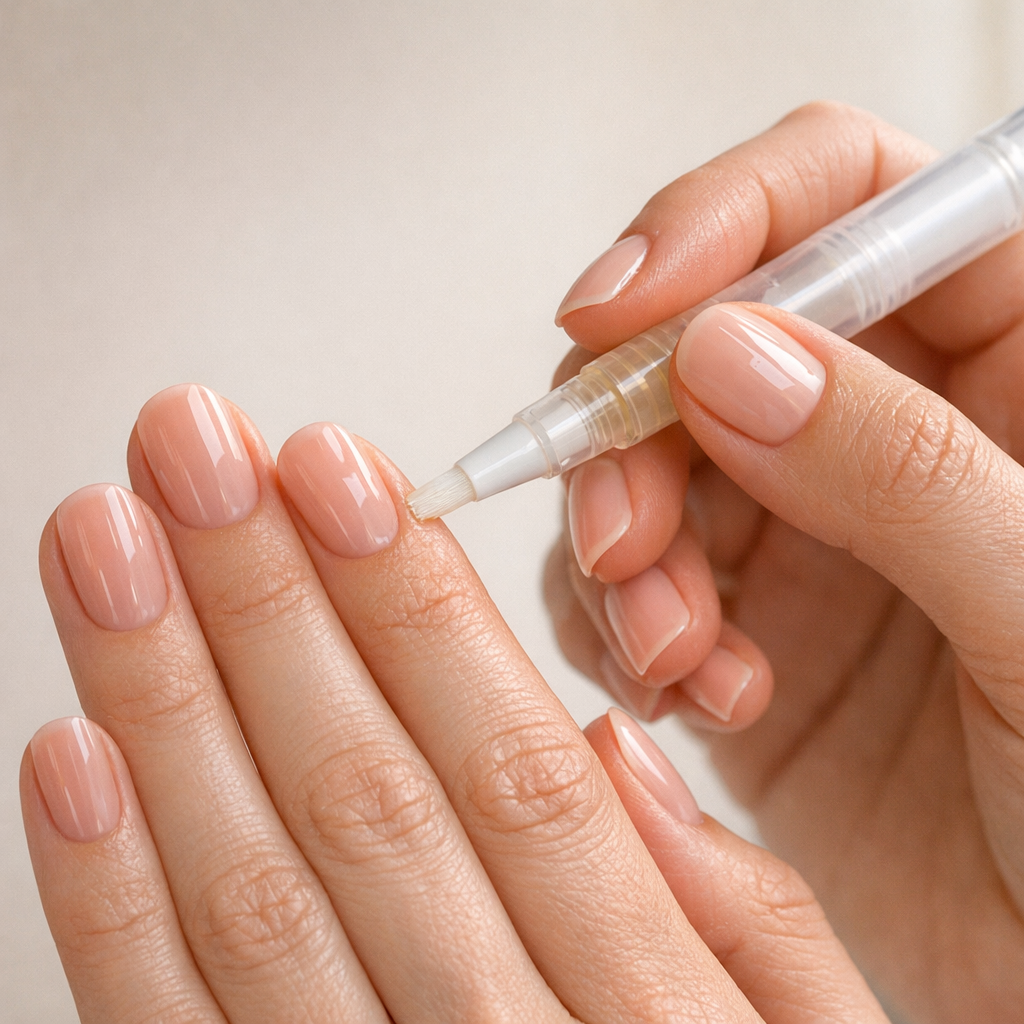
Dry cuticles and hangnails are biting’s best friend. Hydration makes your cuticle line smoother, so you’re less likely to pick — and picking often turns into biting.
We’d suggest a pen you’ll actually use on the sofa, at your desk, or in your bag. Vanilla Cuticle Oil Pen is a customer favourite because it’s easy and mess-free. For the routine itself, this is a helpful reference: aftercare with cuticle oil.
Gel strips are often the best middle ground for nail biters because they’re tougher than polish, neater than many press-ons, and can be removed without aggressive drilling when done correctly.
Here’s a practical comparison based on what our team and community tend to report after trying multiple at-home options.
| Method | How it helps with biting | Common downside for nail biters | Typical wear |
|---|---|---|---|
| Semi-cured gel strips | Smooth barrier, sealed edge, feels hard after cure | If edges lift, you may pick (prep matters) | Up to 2 weeks |
| Traditional nail polish | Creates a visual reminder and mild barrier | Chips can become bite triggers | 2–7 days |
| Press-ons (glue) | Instant length can stop direct biting | Lifting can be tempting to pull off; may stress weak nails | 5–10 days |
| Bitter-tasting treatments | Discourages biting with taste aversion | Doesn’t stop picking; taste can fade or be tolerated | Hours to days |
| Salon hard gel/acrylic | Very hard barrier and thickened tip | Removal can be harsh if done incorrectly; higher cost | 2–3+ weeks |
If you want something you can do at home, keep short, and refresh easily, gel strips are a strong option. For browsing finishes that hide rough nail beds (common during recovery), take a look at solid colour gel nail strips — opaque shades can look especially “put together” while your nails grow out.
Most relapses come from lifting edges, rough cuticles, or choosing a shape/length that leaves tempting bite points. Fix those three, and you’ll remove a lot of the daily friction.
If you leave extra strip hanging past the nail, it will catch on hair and clothes, then lift. Trim close, cure, then file to shape. Aim for a smooth, capped edge that doesn’t invite “just one bite”.
When product overlaps onto skin, it’s more likely to lift at the base. That lifting can become a picking habit, and picking can become biting. Keep a tiny gap around the cuticle line for a cleaner seal.
Your natural nail and cuticle still need care underneath. A quick oil routine keeps the skin comfortable, which reduces mindless chewing. If you want a deeper dive into why it matters, our community loved this read: cuticle care 101.
Peeling can take layers from the nail plate and leave rough patches that tempt biting. If you’re in a rush, it’s better to clip the length down and schedule proper removal later. For the safest method, follow: how to remove gel nail strips.
When the urge to bite hits, the fastest way through is swapping the behaviour — not arguing with yourself. Give your hands something else to do for 60–90 seconds and the intensity usually drops.
Our Velvora fans often share that a visible manicure also increases “pause time” — that small moment where you notice your hand moving towards your mouth. That pause is the habit break you’re aiming for.
If you’re building a consistent routine, consider setting yourself up with variety so you don’t get bored and start picking. A bundle like the Mix & Match Trio (3 strips) can be a fun way to keep your next set ready without overthinking it.
For many people, gel strips are a gentler-feeling alternative to some salon systems because there’s no drilling required for application, and removal can be done carefully at home. That said, any nail product can irritate if misused, especially if the skin is broken from biting.
Velvora products are 100% vegan, cruelty-free, 14-Free, HEMA-Free, pregnancy safe, and fully UK/EU compliant (including CPNP registration and REACH certification). They’re made in certified facilities (ISO9001, FDA, SGS, BSCI) and cut using Japanese blade technology for a cleaner edge and better fit.
If you frequently bite to the point of sore or broken skin, give your fingertips time to settle before applying any product over irritated areas. For full ingredient and compliance details, you can review: product safety and ingredients.
For general nail health and skin hygiene advice, the NHS has a useful overview of looking after your nails and recognising infection signs: NHS guidance on keeping nails healthy. If you’re interested in what cruelty-free claims mean, the Leaping Bunny programme explains recognised standards.
Velvora is designed to make at-home gel nails feel achievable, even if your nails are short, uneven, or recovering from biting. Our strips come with 20 pieces in a range of sizes, which makes it easier to fit different nail beds (including thumbs that are wider or nails that are still growing back).
If your goal is to grow out bitten nails while still feeling put together, browse styles that keep regrowth low-maintenance (opaque colours, subtle shimmer, or classic looks). You can shop now and choose a set that makes you want to protect your progress.
They can help a lot by creating a smooth, sealed barrier that reduces snags and makes biting less satisfying. They work best alongside short nails, good prep, and daily cuticle oil to prevent picking.
Yes — short nails can actually be ideal. Choose a strip that fits sidewall to sidewall, leave a tiny gap at the cuticle, and seal the tip after curing so there’s no tempting edge.
With solid prep and full curing, many people get up to 2 weeks. If you’re a recovering biter and you pick at edges, you might get less at first — but longevity usually improves as the habit fades and your application gets quicker.
HEMA-Free products can be a better fit for some people who prefer to avoid a common sensitiser. If your skin is broken from biting, wait for it to heal before applying any nail product, and stop use if irritation occurs.
Opaque or medium-depth colours are great because they hide unevenness while your nail grows out. If you pick at imperfections, a smoother-looking finish can reduce the urge to “fix” things with your teeth.
Avoid peeling. Use the recommended removal method so the strip releases gently, then hydrate with cuticle oil. Follow Velvora’s step-by-step removal guide to minimise roughness that can trigger biting again.
If you’re ready to start your “no-bite” reset, pick a style you’ll be proud to wear and commit to 7 days of oil + edge sealing. Browse the full gel nail strips collection and choose your next set — then protect your progress one day at a time.

No account yet?
Create an Account