Free delivery on orders over £35
|
Beautiful Nails, Beautiful Savings
|
Fresh nail designs every week!
|
|
Free delivery on orders over £35
|
Beautiful Nails, Beautiful Savings
|
Fresh nail designs every week!
|
|
Choose what you are happy for us to use. Essential cookies keep the shop working, so they stay on.
Needed to run the shop: your basket, secure checkout, your login, fraud prevention and remembering this cookie choice. These cannot be switched off.
Remembers how you like the site to look and behave — recently viewed shades, your wishlist and display settings. Nothing here is based on your interests or used for advertising.
On by default for this purpose. Switch it off and we will stop.
Helps us count visits and see which pages and products people struggle with, so we can improve the shop. We use Google Analytics for this.
Lets us show you our ads on Google, Meta and other sites, and measure whether those ads led to an order. This involves sharing data with those companies.
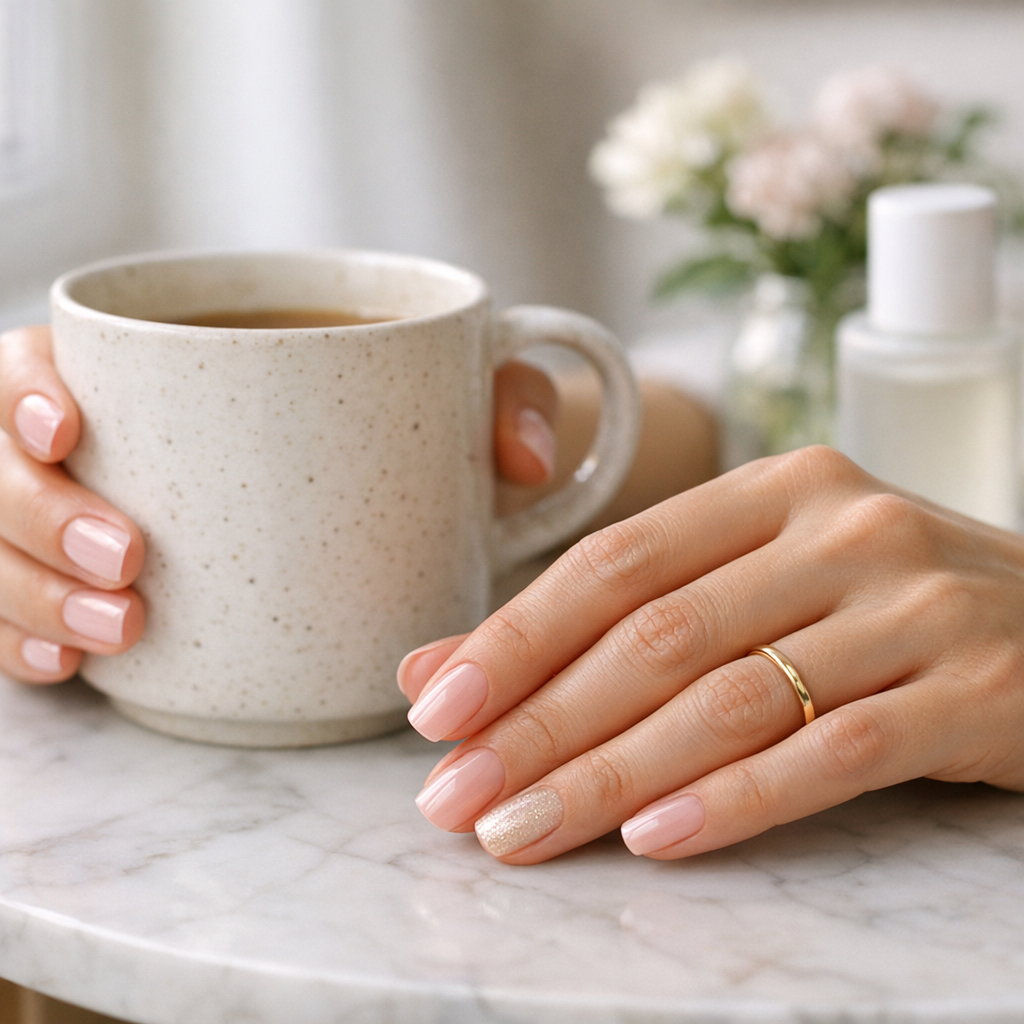
Nail wraps shrinking is usually your first clue that natural nail oils (or leftover skincare) are stopping the strip from gripping properly. We’ve tested Velvora semi-cured gel strips on hundreds of hands, and the pattern is consistent: if the nail plate is even slightly oily, strips can lift at the edges, slide during filing, or pull back after curing.
If you’re new to semi-cured gels, start with the main guide to how to apply gel strips, then use the fixes below to make oily nails behave. When you’re ready to practise with everything in one box, you can start with the Velvora Gel Nail Strips Starter Kit.
Nail wraps shrinking happens when the strip can’t bond evenly, so it pulls back as it warms, flexes, and cures. The most common cause is oil: your natural sebum, hand cream, cuticle oil, sunscreen, hair products, or even washing-up liquid residue can sit on the nail plate and act like a barrier.
With semi-cured gel strips, the adhesive layer needs a clean, dry surface to “grab” the keratin of your nail. If it’s slippery, the strip may look fine at first, then creep back from the tip or sidewalls over the next few hours—especially after a hot shower or washing hands.
For oily nails, the fix is simple: remove oils, dehydrate, then apply with minimal touching. In our experience, most first-time users get a salon-quality finish within 10 minutes when they follow a strict no-oil prep.
One thing we hear from customers time and again is that their strips “magically last longer” when they stop applying hand cream right before doing nails. Save oils for after you’re fully cured and filed.
If nail wraps shrinking keeps happening, it’s usually one of these small (but fixable) habits. The good news: you don’t need to rough up your nails aggressively—just clean application steps.
Cuticle oil is brilliant for nail health, but it’s the enemy of adhesion if used pre-application. If you love daily oiling (we do), keep it to evenings and apply strips at least a few hours later, after washing and wiping nails.
After your manicure, use a pen-style oil around the skin (not under the strip). Our go-to for on-the-go hydration is the Vanilla Cuticle Oil Pen.
If the strip overlaps onto skin, it will lift when you wash hands, then shrinking follows. Leave a hairline gap (about 0.5–1 mm) from the cuticle and avoid wrapping gel onto the sidewalls.
Under-curing leaves the strip flexible and more likely to shift. With semi-cured gels, the lamp finishes polymerisation—turning the strip from “soft” to “set”. If you’re not sure your lamp is strong enough, follow Velvora’s curing guidance in the UV/LED lamp guide.
File the free edge downwards (from the strip to the nail), not back-and-forth across the surface. Surface filing can create micro-lift points at the tips, which then pull back.
To stop lifting on oily nails, seal the tip, press with purpose, and cure in two short rounds rather than one rushed one. After testing across different nail shapes, these are the steps that change wear time the most.
If you want more real-world fixes (including photos of what lifting looks like), Velvora fans often find the fastest answers in the troubleshooting guide.
Ready to put the tips into practice? Browse our full gel nail strips collection and shop now for your next set (gel strips from £10, with free UK delivery on orders over £35).
Yes—some nails and routines simply expose the edges to more stress, which makes oily-nail shrinkage show up faster. If your hands are in water all day, you’ll need tighter prep and stronger sealing.
The best aftercare for oily nails is hydration on the skin, not the strip edge, plus gentle habits for the first few hours. Once the gel is fully set, cuticle oil helps flexibility and keeps the manicure looking fresh.
If you’re curious about why hydration helps without ruining wear, our aftercare routine explains the balance between flexibility and adhesion: aftercare with cuticle oil.
Not every lifting issue is oil. Use this table to pinpoint the cause so you can fix it without guessing.
| What you see | Most likely cause | Fix |
|---|---|---|
| Wrap pulls back from tip after a few hours | Oily nail plate or poor tip seal | Alcohol wipe, avoid touching, fold/cure/file, double-cure |
| Lifting starts at cuticle line | Strip placed on skin or cuticle not pushed back | Leave a small gap; remove invisible cuticle; press edges firmly |
| Edges lift after shower/day 2–3 | Under-curing or water exposure too soon | Cure fully; wait 1–2 hours before long water exposure |
| Only one or two nails lift repeatedly | Nail shape/sizing mismatch | Size down; warm and stretch gently; use correct strip width |
Used correctly, semi-cured gel nail strips are designed to be a gentler at-home option than many traditional systems, especially when you prioritise safe removal and avoid harsh scraping. Velvora strips are 100% vegan, cruelty-free, 14-Free, HEMA-Free, pregnancy safe, and fully UK/EU compliant (CPNP registered and REACH certified), made in certified facilities using Japanese blade technology for precision sizing.
If you have sensitive skin or a history of reactions, it’s smart to read up on cosmetic safety and ingredient rules. The UK Government explains how cosmetic products are regulated here: UK cosmetic product safety and compliance guidance.
For general nail health basics (brittleness, breakage, when to seek medical advice), the NHS has a helpful overview: NHS guidance on brittle nails.
Velvora is built for real life: quick application, salon-glossy results, and practical guidance when things don’t go perfectly the first time. Each set includes 20 strips in multiple sizes, which matters because correct sizing is one of the biggest anti-lift factors on oily nails.
If you’re a regular wearer and want sets arriving on autopilot, the subscription option can make sense too. For most people who struggle with oily nails, consistency (same prep, same lamp routine) is what finally unlocks reliable wear.
Because natural oils and product residue create a barrier on the nail plate, so the adhesive layer can’t bond evenly. That leads to lifting at the edges and nail wraps shrinking at the tip. Wash, dehydrate with alcohol, avoid touching the nail, and seal the free edge for best results.
Size the strip slightly narrower than your nail, press firmly at the edges, fold excess over the tip before curing, then cure, file downwards, and do a short second cure to lock the edge. Shrinking is most often a mix of oil + an unsealed tip.
Light buffing can help on very smooth nails, but it’s not the main fix for oil. The bigger win is dehydration: push back cuticles, wipe with alcohol, and don’t touch the nail plate afterwards. Over-buffing can weaken nails and isn’t needed for most people.
Yes—just use it at the right time. Avoid cuticle oil right before application, and apply it after curing around the skin (not under the strip edge). Daily oiling can actually improve flexibility and reduce cracking once the manicure is fully set.
They can, as long as prep is consistent. With proper dehydration, correct sizing, full curing, and a sealed tip, many people with oily nails get wear up to 2 weeks. Without prep, you’ll often see lifting in the first 24–48 hours.
Use a gentle lift-and-soak approach and never rip them off. Warm oil or remover can help loosen the adhesive so the strip slides away without peeling the nail surface. Follow Velvora’s removal steps for the safest method.
If you want the easiest route to a longer-lasting set, start with a shade you’ll wear often and practise the routine twice—most of the learning curve is prep. Browse the full range and shop now when you’re ready.

No account yet?
Create an Account