Free delivery on orders over £35
|
Beautiful Nails, Beautiful Savings
|
Fresh nail designs every week!
|
|
Free delivery on orders over £35
|
Beautiful Nails, Beautiful Savings
|
Fresh nail designs every week!
|
|
Choose what you are happy for us to use. Essential cookies keep the shop working, so they stay on.
Needed to run the shop: your basket, secure checkout, your login, fraud prevention and remembering this cookie choice. These cannot be switched off.
Remembers how you like the site to look and behave — recently viewed shades, your wishlist and display settings. Nothing here is based on your interests or used for advertising.
On by default for this purpose. Switch it off and we will stop.
Helps us count visits and see which pages and products people struggle with, so we can improve the shop. We use Google Analytics for this.
Lets us show you our ads on Google, Meta and other sites, and measure whether those ads led to an order. This involves sharing data with those companies.
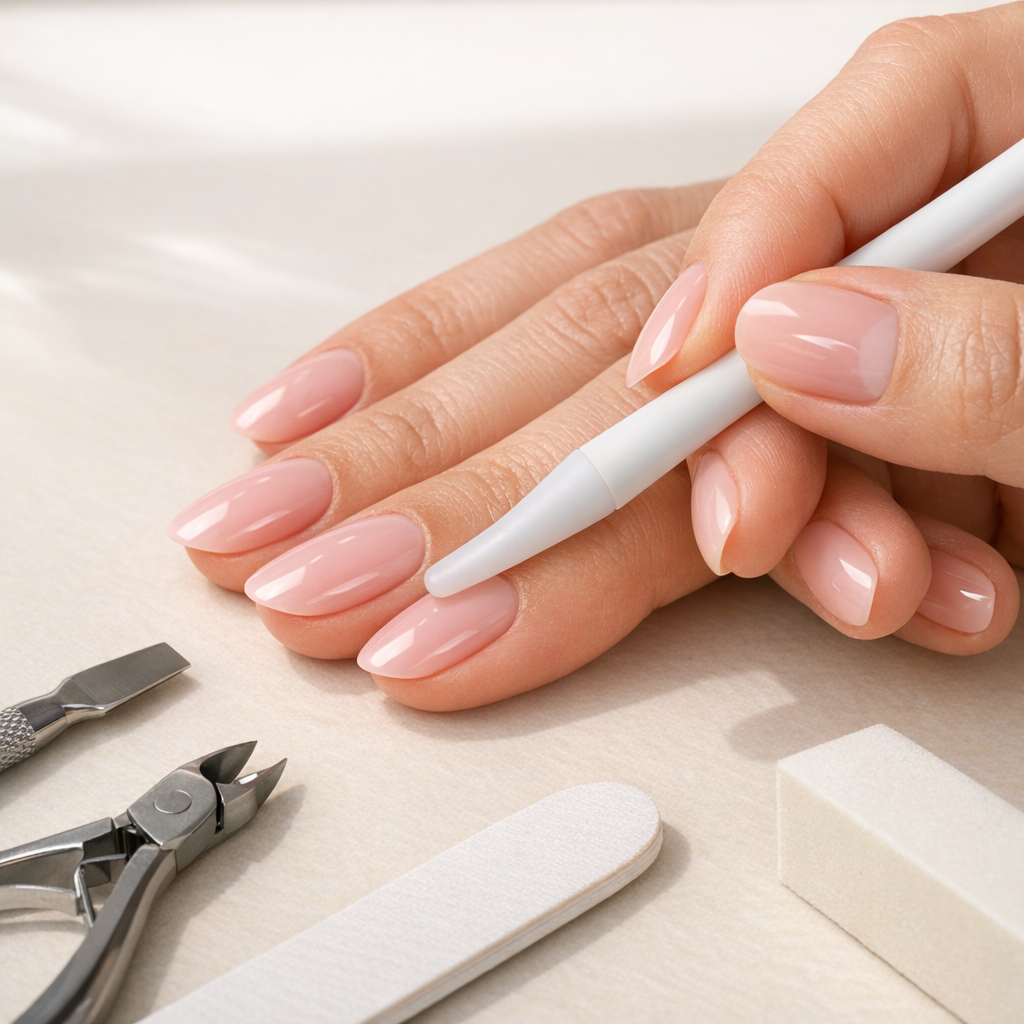
Yes—in most cases you can fix lifting nail strips at home, as long as you catch it early and the strip isn’t contaminated with fluff, hand cream, or water. The key is to work out why it’s lifting (prep, sizing, curing, or aftercare), then use the right rescue method rather than peeling and pressing harder.
If you’re shopping for a fresh set (or a back-up for your handbag), browse Velvora’s semi-cured gel nail strips—they’re vegan, cruelty-free, 14-Free, HEMA-Free, pregnancy safe, and UK/EU compliant.
We’ll walk you through quick fixes for the most common lifting situations, plus the small tweaks that stop it happening again. If you want the full at-home set-up, the Velvora Gel Nail Strips Starter Kit makes it simple (and it’s the kit our community recommends most for first-timers).
Yes, you can fix lifting nail strips if the lifting is minor (usually at the free edge or sidewall) and you act before water or lint gets underneath. Once debris is trapped under the strip, the best “fix” is usually removing and replacing that nail for hygiene and longevity.
In our experience, lifting tends to fall into two buckets:
Velvora gel strips are semi-cured gel, so they can often be re-sealed with a careful press and another cure (assuming the surface is clean and dry). With non-gel nail polish strips, you can sometimes smooth and seal, but you won’t get the same “re-cure” advantage.
The fastest fix is to clean, press, and re-cure the lifted edge—most small lifts can be stopped in under 5 minutes if you do it before a shower or washing up.
This is the method we use most often when a corner lifts after day 2–5.
One thing we hear from customers time and again is that a quick re-cure after a “little pop-up” saves the whole set—especially if it’s caught before hair starts snagging at the edge.
If the lift is only at the very tip, gently trimming can remove the snag point so the lift can’t spread.
This works particularly well if you keep your nails short or you’ve recently typed a lot (keyboards are notorious for catching a tiny unsealed edge).
If you can see fluff, hair, or whitening under the strip, replace that nail. Trying to seal contamination in usually looks worse and fails faster.
If you’re not sure about safe removal, follow Velvora’s step-by-step guide: how to remove gel nail strips.
Nail strips lift when something prevents full contact between strip and nail—usually oil, moisture, cuticle skin, incorrect sizing, or an edge that wasn’t fully cured and sealed.
| Where it’s lifting | Most likely cause | Best fix |
|---|---|---|
| Free edge (tip) | Not sealed/trimmed, tip impact, typing | Trim + press + re-cure |
| Sidewalls | Strip too wide, oil/moisture at edges | Press + re-cure; next time size down |
| Cuticle line | Cuticle overlap, lotion/oils, wet application | Replace that nail; improve prep next time |
| Whole strip feels loose | Major prep issue or water got underneath | Remove and reapply |
The best way to prevent lifting is thorough prep and a properly sealed edge. After testing across hundreds of nail shapes and sizes, we’ve found tiny details (like cleaning sidewalls and choosing the slightly smaller strip) make the biggest difference.
If you struggle with sizing, Velvora’s guide makes it painless: how to choose the right nail strip size.
For a full walkthrough, keep Velvora’s application steps handy: how to apply gel nail strips.
Ready for a fresh set that’s easy to apply and re-seal? Browse Velvora’s gel nail strip French tips for that crisp, clean look that hides minor regrowth beautifully.
Daily aftercare should hydrate your cuticles, not flood your strip edges with oil. The trick is placement and timing.
Cuticle oil is brilliant for nail flexibility and comfort, but if you saturate the sidewalls you can encourage lift over time. Our community of Velvora fans often shares the same tip: apply oil, then wipe around the edges.
If you want a tidy, handbag-friendly option, the Watermelon Cuticle Oil Pen makes it easy to target the cuticle line without overdoing it.
Don’t try to seal a strip back down if there’s trapped debris, a greenish discolouration, pain, or if your nail feels damaged underneath. In those situations, removing the strip safely and letting the nail breathe is the better call.
For nail health guidance you can trust, see the NHS advice on keeping your nails healthy.
Velvora is built for safe, reliable at-home wear, with formulas and tools that make lifting less likely and fixes more straightforward.
If you’d like to read more about what’s inside and how we keep everything compliant, visit Velvora’s product safety and ingredients page.
For regular wearers, many customers like the convenience of a monthly top-up via the gel nail strip subscription—especially if you prefer swapping styles often rather than stretching a set to the limit.
Want to refresh your manicure with something that suits every occasion? Shop now and pick a set you’ll genuinely look forward to wearing.
Yes—if the lift is small and clean. Clean the surface, press the lifted edge down, and (for semi-cured gel strips) re-cure under a UV/LED lamp. If debris or water has got underneath, removing and replacing that nail gives a cleaner, longer-lasting result.
Cuticle lifting usually means the strip was applied onto cuticle skin or there was oil/moisture at the base of the nail. Next time, push back cuticles, dehydrate the nail plate, and leave a tiny gap between the strip and the cuticle line.
You can, but use it carefully. Apply cuticle oil to the skin at the base of the nail, avoid flooding the sidewalls, and wipe away any excess around the strip edges after a minute. Too much oil near a lifted edge can make the lift spread.
Yes—re-curing is one of the best fixes for semi-cured gel strips when the lift is minor and clean. Press the edge down first, then cure for your usual time. If the lift is contaminated, replace that nail instead.
Often, yes—especially if lifting happens at the sidewalls. A strip that’s slightly too wide can’t wrap the curve of the nail cleanly, so it pops up. If you’re between sizes, choosing the smaller strip usually seals better.
Focus on prep and moisture control: dehydrate nails before application, avoid hand cream beforehand, press and seal the free edge, and try to keep hands out of hot water for a few hours after applying. Those small steps prevent most early lifts.
If your current set is beyond saving, it’s the perfect excuse to switch it up. Browse the latest styles and essentials and shop now for your next Velvora manicure.

No account yet?
Create an Account