
Blog · 4 March 2026 · Updated 12 October 2026
Gel Nail Strips and Nail Health: What to Know
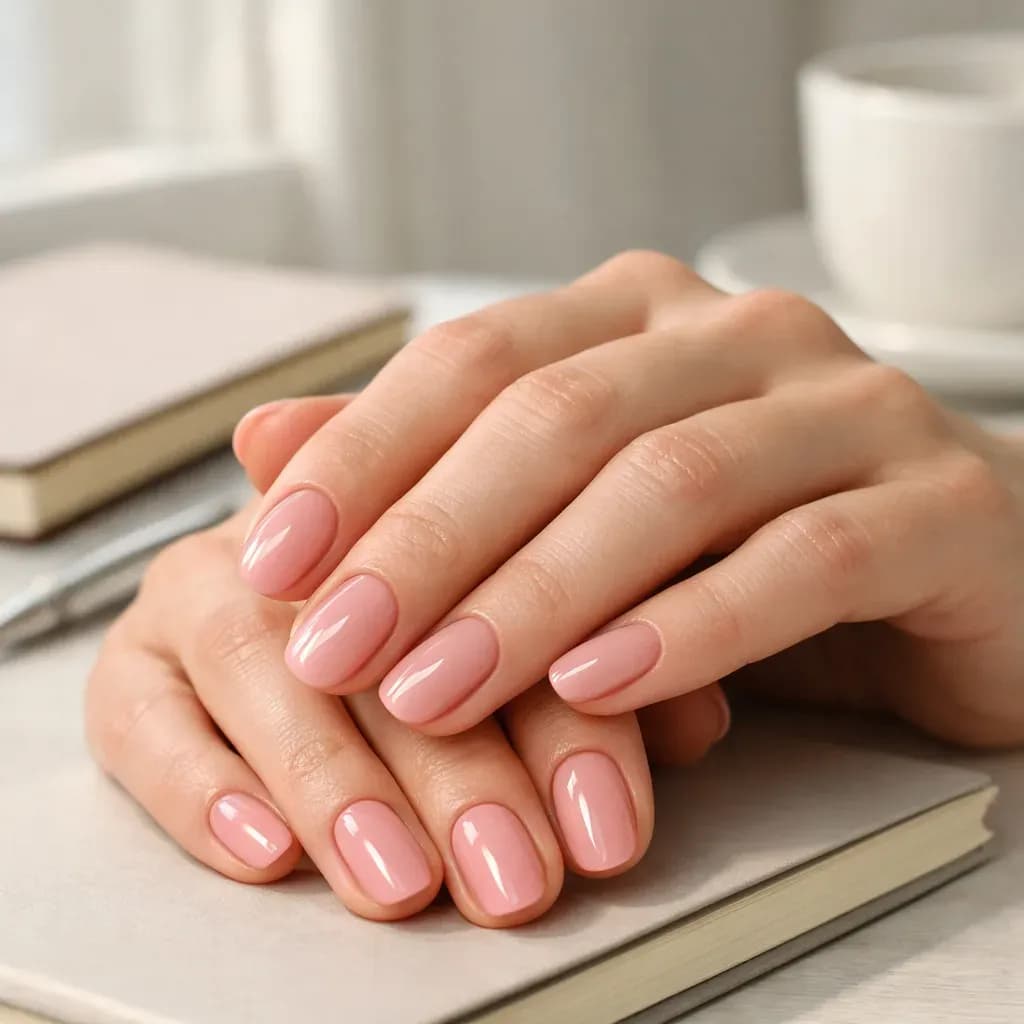
Gel nail strips aren't bad for healthy nails in themselves. Most of the damage people notice comes from how they're prepped and removed: over-buffing, picking at a lifted edge or peeling a strip off dry. Gentle prep, a full cure and slow removal with cuticle oil are what keep your nails in good shape.
If you're searching "gel nail strips nail health", you probably want two things at once: nails that look salon-fresh, and the reassurance that you're not wrecking your nail plate to get there. The good news is that the habits that protect your nails are simple, and they matter more than the type of manicure you choose.
Velvora's semi-cured gel nail strips are £11.99 a set at full price, with 20 strips in mixed sizes plus a nail file and a manicure stick. If you're new, the Velvora Gel Nail Strips Starter Kit gives you two sets of your choice, a cuticle oil pen and the mini UV/LED lamp, so you can get it right first time.
Gel nail strips and nail health: what the general advice agrees on
General nail care advice keeps coming back to one principle: nails don't like repeated knocks, picking or harsh chemicals, and they recover best with time, moisture and gentle handling.
Damage usually comes from how a manicure is removed (peeling, scraping, heavy filing) rather than from wearing it. Semi-cured gel strips can be a gentler choice for many people because they don't need heavy filing or an acetone soak, as long as you remove them properly.
- Trauma is the big one: picking, peeling or popping off any nail coating can lift layers of the nail plate with it.
- Hydration matters: nails are porous, and frequent hand washing and solvents can dry them out.
- Contact allergy is real: some people become sensitised to certain acrylates used in many gel products. Choosing HEMA free products can reduce the risk, but no gel product can promise zero risk of a reaction.
- Give nails a break if they ask for one: if you see persistent peeling, soreness or redness around the nail, pause and reassess.
For a plain-English overview of common nail issues, the NHS is a helpful starting point: brittle nails and their causes (NHS).
Are gel nail strips safer for nails than salon gel or acrylics?
They can be gentler, mainly because removal needs no filing and no acetone, but it depends on your technique and your skin. Semi-cured gel strips are real gel, cured to around 80 per cent in production. You finish the cure under a UV or LED lamp at home, so they harden into a durable coating without any wet product near your skin.
Where nail damage usually comes from
Most nail thinning comes down to removal. The usual culprits are over-buffing "to make it stick", curing too briefly (so the strip stays soft and lifts), and peeling it off when it snags.
- Over-prep: heavy buffing removes protective layers of the nail. Aim to take the shine off at most.
- Skin contact: any gel product that keeps touching the skin round your cuticles can raise the chance of irritation or sensitisation over time.
- Forced removal: lifting an edge and pulling can split the layers of the nail plate.
Comparison table: nail health factors by manicure type
| Method | Typical wear | Removal risk to nail plate | Common pitfalls |
|---|---|---|---|
| Semi-cured gel nail strips (lamp-cured) | Up to 14 days | Low to medium (mostly down to technique) | Short curing, picking or peeling, too much buffing |
| Salon gel polish | 2 to 3 weeks | Medium to high (usually soaked in acetone, then scraped) | Over-filing, frequent acetone, skin contact |
| Acrylic or hard gel extensions | 2 to 4 weeks (with infills) | High (filing is common) | Heavy filing, pressure, breakage |
| Nail polish strips (no lamp) | Around a week | Low | Peeling off too soon, dryness from remover |
If your nails need a lighter few weeks, Velvora's nail polish strips are real nail polish in a strip. There's no lamp and no drying time, and they come off with ordinary nail polish remover.
What healthy wear looks like with semi-cured gel strips
Healthy wear means the strip stays sealed, your nail stays smooth and your cuticles stay calm. You shouldn't have stinging, heat spikes or redness around the nail folds while curing or wearing them.
Signs your nails are coping well
- Little or no lifting at the cuticle and sidewalls
- No new white patches, peeling layers or rough "steps" after removal
- Cuticles look hydrated rather than ragged or cracked
Signs you need to change your routine
- Peeling layers after removal (often from picking or too much buffing)
- Persistent itching or redness around the nails (stop using the product and speak to a pharmacist or GP)
- Frequent lifting within 24 to 48 hours (usually a prep, fit or curing issue)
Velvora gel strips are HEMA free and TPO free, vegan and cruelty-free. If you like reading the details, see product safety and ingredients.
Best practice: prep, cure and remove without damage
Gentle prep, a complete cure and gentle removal. This trio makes or breaks nail health with gel nail strips.
1) Prep: less filing, more cleaning
A clean, dry nail surface helps strips bond without aggressive buffing. Applying a set takes about ten minutes once you've got the hang of sizing, and that time is better spent on fit and cleanliness than on sanding.
- Wash your hands, then dry them thoroughly.
- Push back cuticles gently. Don't cut them, as they help protect the nail.
- Buff lightly only if needed: think "take the shine off", not "thin the nail".
- Choose the right strip size. Slightly smaller than your nail keeps gel off the skin.
For the full step by step, follow our guide on how to apply gel strips.
2) Cure: a complete cure is a healthier cure
An under-cured strip stays softer, which leads to lifting and snagging, then picking, and that's when nails suffer. A full cure finishes hardening the gel so it's tough, glossy and sealed.
- Cure for 60 seconds under a UV or LED lamp, and do your thumbs separately.
- Add 15 to 30 seconds for very dark or glittery shades.
- Keep gel off your skin before curing: size and placement matter.
Our LED lamp guide covers positioning and timings.
3) Remove: don't peel, release
Gentle removal protects the layers of your nail. The aim is to loosen the bond and ease the strip off, not rip it.
- Add a few drops of cuticle oil round the edges of each nail and wait a minute or two.
- Lift an edge with a wooden stick, then peel back slowly, adding more oil as you go.
- No acetone is needed. Stubborn corners need more oil and more time, not more force.
The full method is in our guide on how to remove gel nail strips.
Cuticle oil, hydration and the skin around your nails
Keeping nails and cuticles moisturised is one of the simplest habits for better nail condition. Nails and the skin around them do best when they're flexible, especially if you use hand sanitiser a lot.
A realistic aftercare routine (30 seconds)
- Apply cuticle oil once or twice a day, especially after washing your hands.
- Massage it into the cuticle line and sidewalls for 10 to 15 seconds per hand.
- Use hand cream at night to lock it in.
Regular oiling helps keep hangnails at bay, and because oil is also how you remove the strips, it makes removal feel easier too. For one to keep in your bag, try the Watermelon Cuticle Oil Pen or the Vanilla Cuticle Oil Pen.
For a fuller routine, including what to do between sets, see aftercare with cuticle oil.
Common myths about gel nail strips and nail health
Most "gel strips ruined my nails" stories trace back to lifting, peeling or over-buffing, not to the strips being on the nail. Here are the big myths.
Myth 1: "If it lifts, I should just peel it off"
No. Lifting is a sign to re-seal (press down and cure again) or to remove the strip properly with oil. Peeling takes nail layers with it, especially near the tip.
Myth 2: "More buffing means better grip"
Over-buffing weakens nails and can make them feel bendy. A good fit, clean nails and a full cure matter far more than sanding.
Myth 3: "HEMA free means allergy-proof"
HEMA free cuts out a common sensitiser, but people can still react to other acrylates or ingredients. If you've reacted to gel before, keep product off your skin and go carefully. If you get ongoing irritation, stop using it and speak to a pharmacist or GP.
Myth 4: "LED lamps are dangerous"
Curing takes about 60 seconds per hand, which is a short exposure. If you'd like extra peace of mind, apply sunscreen to the backs of your hands (keeping it off the nails so the strips still stick) or wear fingerless UV gloves. Our article on whether UV nail lamps are safe goes into more detail, and the NHS has practical advice on sunscreen and sun safety.
If you're ready to pick a design that suits your week, browse the full range, and remember: great nails start with gentle removal.
Why Velvora
Velvora is a UK brand for people who want salon-looking nails without the salon trade-offs. A typical UK salon gel manicure costs £25 to £45, while a Velvora gel set is £11.99 at full price.
- Real semi-cured gel: cured to around 80 per cent in production, finished in 60 seconds under your lamp.
- Kinder formula choices: HEMA free and TPO free, vegan and cruelty-free.
- Gentle removal: cuticle oil and a wooden stick, no acetone.
- Wear you can plan around: up to 14 days on fingernails. In our own wear tests strips typically last 10 to 14 days.
- Practical perks: free UK delivery on orders over £35, and 14 days to cancel most orders.
Common questions
Are gel nail strips bad for nail health?
Gel nail strips aren't bad for healthy nails in themselves. Most problems come from picking, peeling them off dry, over-buffing or rushed removal. With gentle prep, a full cure under a UV or LED lamp and slow removal with cuticle oil, many people wear them without noticing any change to their nails.
Should I take breaks from gel strips?
Listen to your nails and the skin around them. If you notice peeling, tenderness, redness or repeated lifting that tempts you to pick, take a break and focus on cuticle oil and gentle care. If your nails look and feel normal after removal, you may not need a long break.
How do I remove gel nail strips without damaging my nails?
Add a few drops of cuticle oil round the edges, wait a minute or two, then ease the strip up with a wooden stick and peel it back slowly. Add more oil if you feel resistance. No acetone is needed, and never peel a strip off dry.
What does HEMA free mean for nail health?
HEMA free means the formula is made without HEMA, an acrylate that is a well-known cause of contact allergy in some gel users. It can lower the risk for some people, but it doesn't mean you can't react to anything else, so keeping gel off your skin still matters.
Can gel nail strips help brittle nails?
They can act as a protective layer, which helps some people with snagging and breaks day to day. Brittle nails have many possible causes, though, so keep up the hydration and gentle handling, and see a pharmacist or GP if the brittleness carries on.
If your goal is healthy, glossy nails with fewer salon appointments, start with a set that fits your routine and commit to gentle removal. Explore solid colour gel nail strips for everyday wear, then shop now when you're ready.
Like our nail guides?
Add Velvora as a preferred sourceGoogle shows preferred sources more often in Search, AI Overviews and AI Mode. It takes one tap and you can undo it any time in your Google settings.