
Blog · 7 September 2026
How to Recover Your Nails After Acrylics: A Realistic Plan
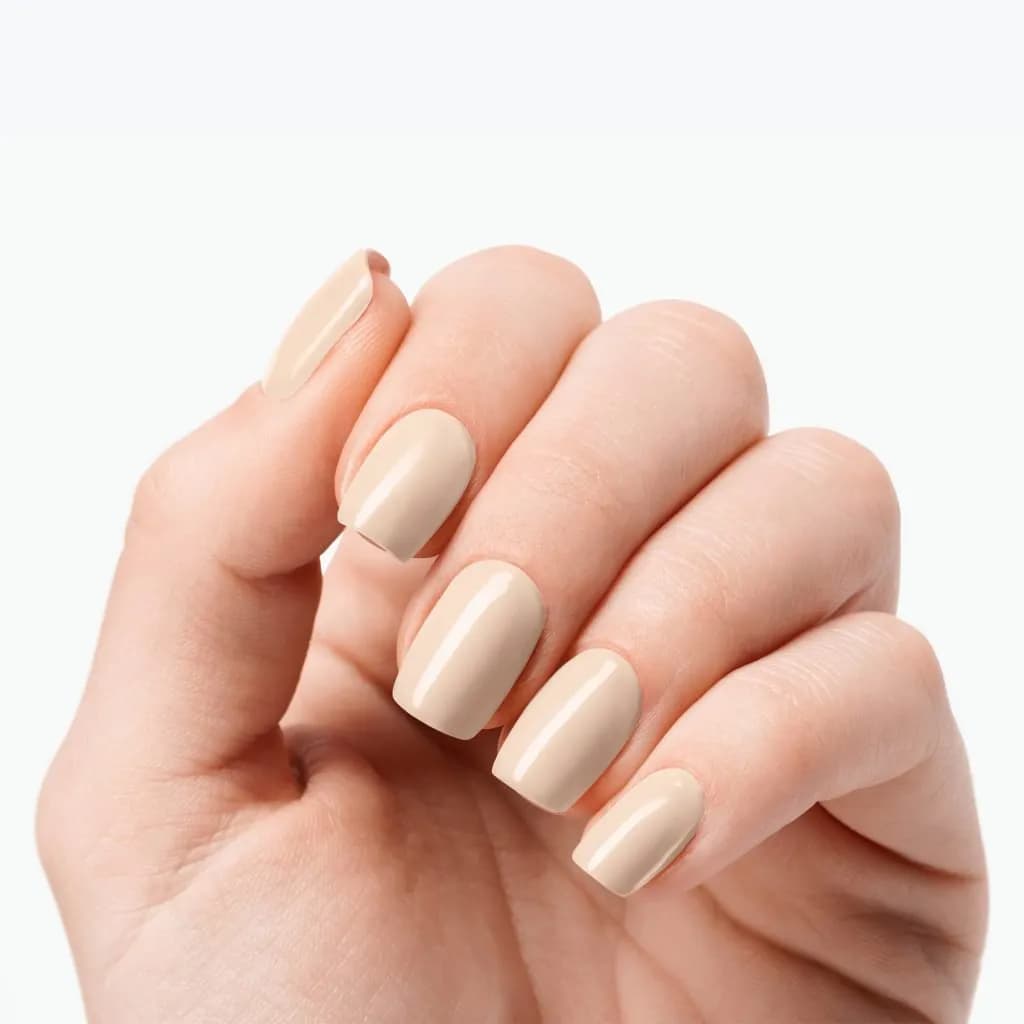
You take the acrylics off and your nails look awful: thin, bendy, white and rough in patches, splitting at the tips. It is a horrible moment, and the internet response is usually a miracle oil. Here is the more useful version, starting with the part nobody enjoys hearing.
What actually happened to your nails
It is rarely the acrylic itself. It is the preparation and the removal: the surface is buffed rough so product grips, and at removal it is soaked in acetone and filed back. Repeat that every few weeks and the plate gets progressively thinner. Thin nails bend instead of holding firm, and once the layers are exposed at the tip they start to peel apart. The white patches are usually surface dehydration and roughness rather than fungus, though see the note below if in doubt.
The recovery plan
Week one: stop the bleeding, so to speak. Cut nails short. Not a little shorter, properly short. Length is leverage, and every knock on a long thin nail travels down to the weak part. Trim off any splitting tip so it cannot tear further.
Every day from now: oil. Cuticle oil around and under the free edge, once a day, every day. A conditioned nail bends and returns; a dry one snaps. This is the single highest value habit in the whole plan, and it costs a few pounds. The cuticle oil guide takes thirty seconds to read.
Every day: gloves for wet work. Washing up and cleaning drive the wet-dry cycling that delaminates a weakened nail fastest. This one habit changes more than any product.
Weeks one to four: no filing of the nail plate, at all. No buffing the surface smooth, however tempting the ridges are. You would be removing the little nail you have left. File the free edge only, in one direction, with a fine file.
From week two, if you want colour back: choose something that needs no buffing to go on and no acetone to come off. This is exactly where semi-cured gel strips fit in a recovery: the cured layer takes the daily knocks instead of your nail, it hides ridges and white patches completely, and it lifts off with oil. Keep the sets short and take a few days between them.
1. Barely There (Nude)
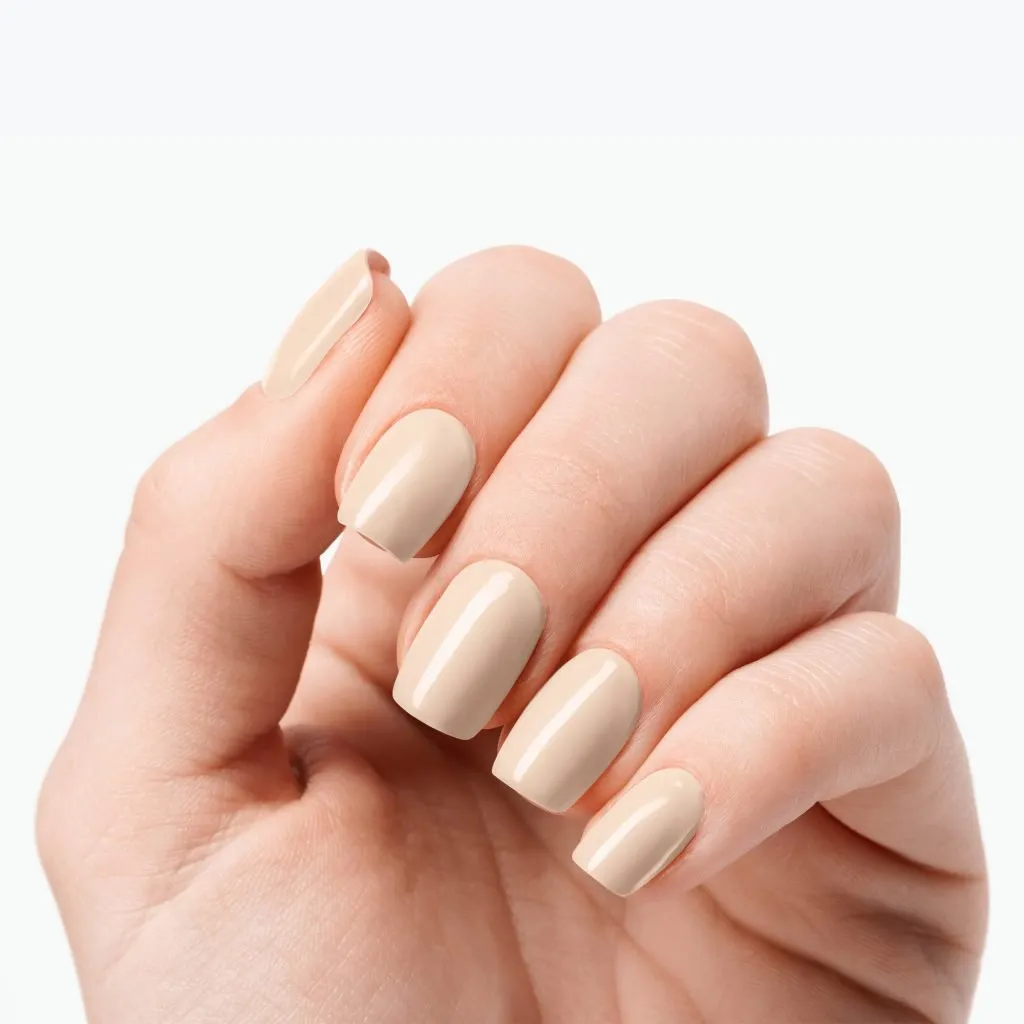
A skin-tone neutral that makes short recovering nails look deliberate rather than damaged. See Barely There (Nude).
2. Snow Pearl
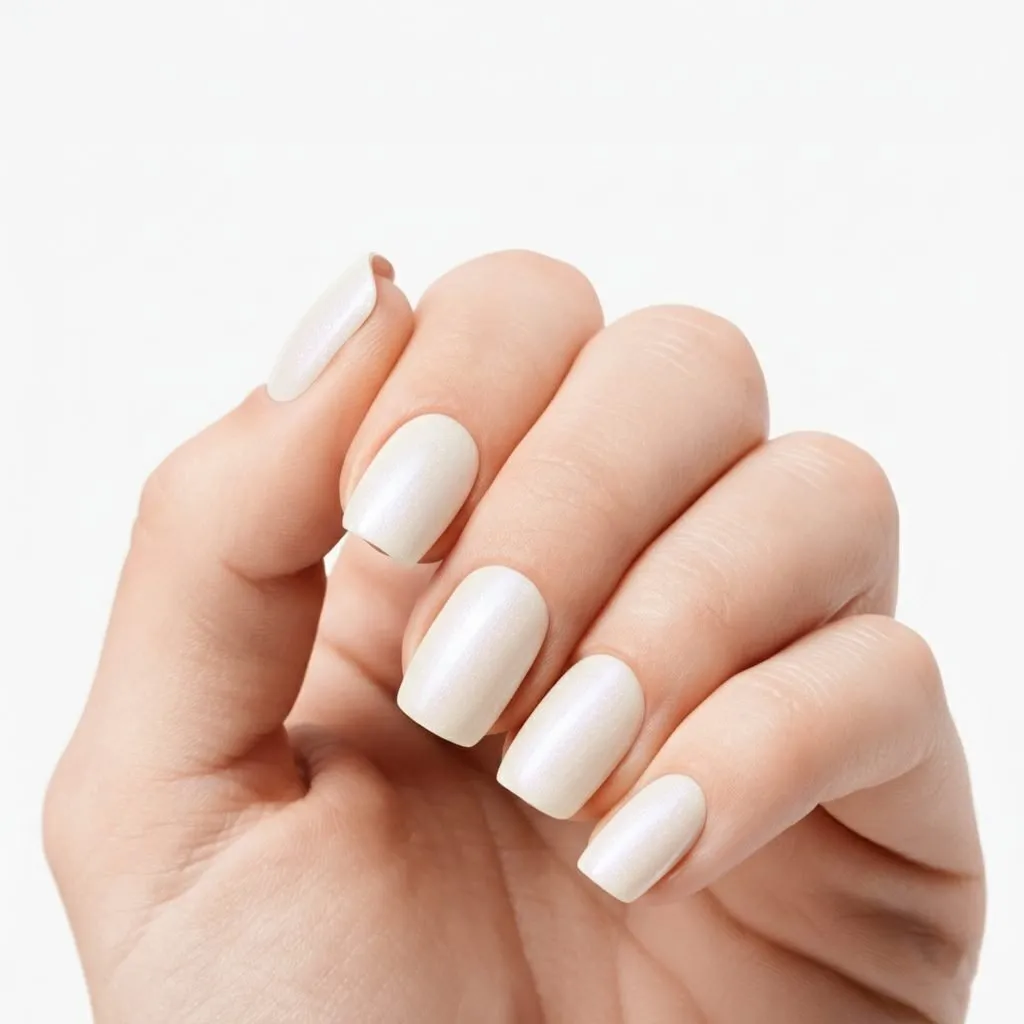
A soft pearl finish, which disguises surface ridges and uneven texture better than any high-gloss dark shade. See Snow Pearl.
The honest timeline
A fingernail replaces itself completely in roughly four to six months, and toenails take closer to a year. So the damaged section has to grow from the base to the tip before it is gone, and no product speeds that up. What you should notice much sooner, within two to three weeks, is fewer splits and less peeling, because protection works immediately even though growth does not.
What to skip
Hardeners, which make nails brittle rather than strong when what you have is thin and dry. Buffing to smooth ridges, which thins them further. Gelatine and other supplement folklore. And going straight back into acrylics next week, which starts the cycle again from a worse baseline.
Quick answers
How long does it take for nails to recover from acrylics?
Four to six months for a fingernail to grow out completely, because the damaged plate cannot heal and has to be replaced by new growth. Splitting and peeling usually improve within two to three weeks of a gentler routine.
Can you repair damaged nails?
Not the existing nail plate, which is dead keratin. You protect it while new nail grows out. Oil daily, keep nails short, wear gloves for wet work, and stop filing the nail surface.
Should I keep my nails bare while they recover?
Not necessarily. What matters is avoiding buffing on and acetone off. A product that presses on and lifts off with oil protects the nail from knocks while it grows, which usually helps more than leaving it bare.
Why are my nails white and rough after acrylics?
Usually surface dehydration and roughness from buffing and acetone rather than an infection. If it is yellow, green, thickening or crumbling instead, see a pharmacist or GP.
Can I get acrylics again after recovery?
Yes, but the cycle repeats if the prep and removal are the same. Longer breaks between sets, less aggressive prep, and a technician who does not over-file all make a real difference.
Velvora makes semi-cured gel nail strips, nail polish strips and nail care, wear-tested on real nails here in the UK. Gel sets are £11.99 for 20 strips, formulated TPO and HEMA free, and orders over £35 ship free anywhere in the UK. New to strips? Start with the beginner guide, or browse the full collection.
Related reading: strengthening weak nails, peeling nails and the complete hand care routine.
Like our nail guides?
Add Velvora as a preferred sourceGoogle shows preferred sources more often in Search, AI Overviews and AI Mode. It takes one tap and you can undo it any time in your Google settings.