
Blog · 4 September 2026 · Updated 12 October 2026
Ridges in Nails: What They Mean and What Actually Helps

Vertical ridges in nails, running from cuticle to tip, are common, usually harmless and mostly cosmetic, a bit like fine lines on skin. Horizontal ridges or grooves running side to side are the ones worth showing to a pharmacist or GP. For the vertical kind, moisture improves the look and a gel strip or polish smooths it over straight away.
Run a fingertip down your thumbnail and you may feel fine lengthwise lines, like the grain in wood. Ridges are one of the most searched nail worries, and the honest news is mostly good: the common kind is a texture that tends to come with time. The direction of the ridge is what matters.
Vertical ridges: the common kind
Lines running from cuticle to tip become more visible with age and with dryness, because a dehydrated nail shows its texture more, the way dry skin shows lines. They aren't caused by polish or gel, and fine vertical lines that have crept in gradually are usually nothing to worry about on their own.
What helps the look: daily cuticle oil to keep the nail conditioned, very gentle buffing at most (over-buffing thins the nail and makes things worse), and good hand care generally, as in our hand care routine. Our cuticle oil aftercare guide shows how to fit oil into your day.
The instant cosmetic fix
A ridge is a texture, so anything that adds a smooth layer on top hides it. A cured gel strip gives ridged nails a smooth, glossy surface for up to 14 days, which is why textured nails are a good match for strips. Softly pearlescent and shimmer finishes hide any remaining unevenness best; high-gloss darks show the most, the same way gloss paint shows up an uneven wall.
1. Snow Pearl
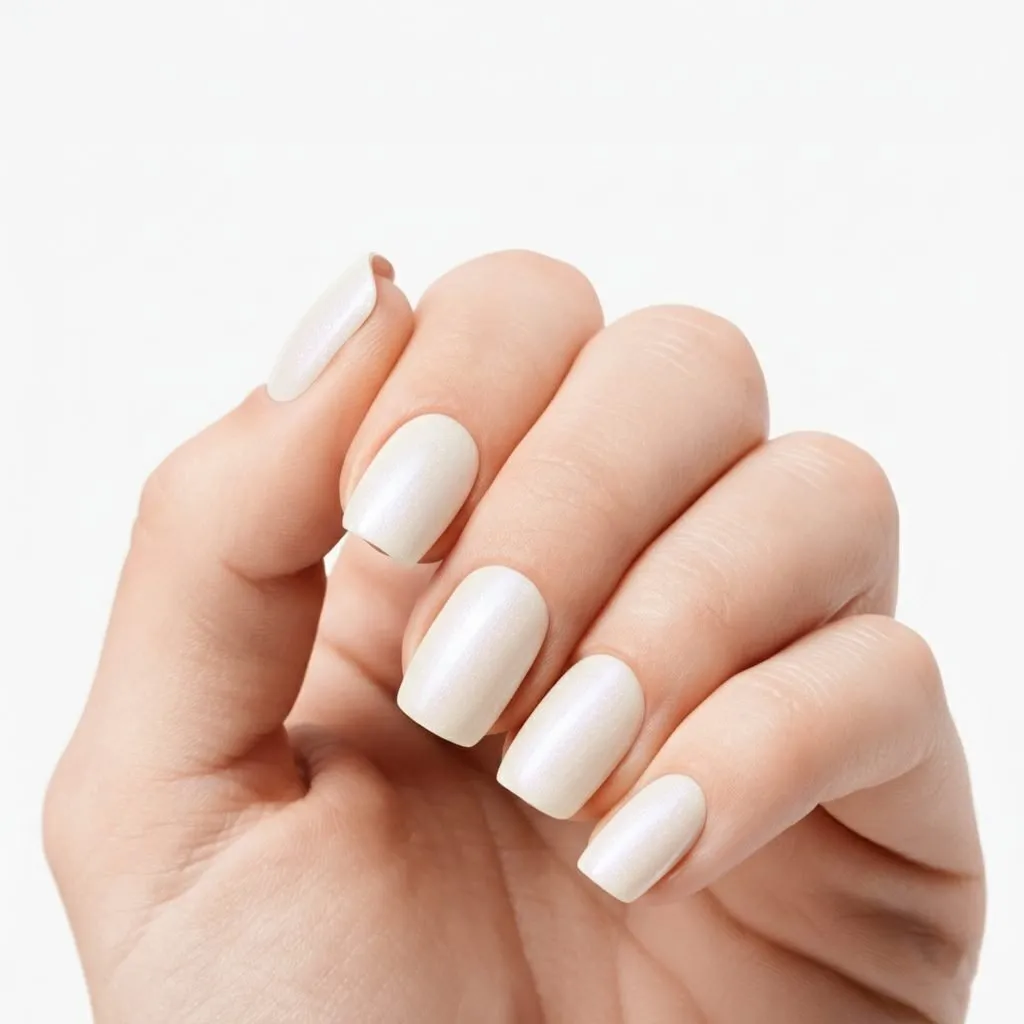
A soft pearl sheen that visually blurs surface texture, the classic choice for ridged nails. See Snow Pearl for the full details.
2. Champagne Sparkles
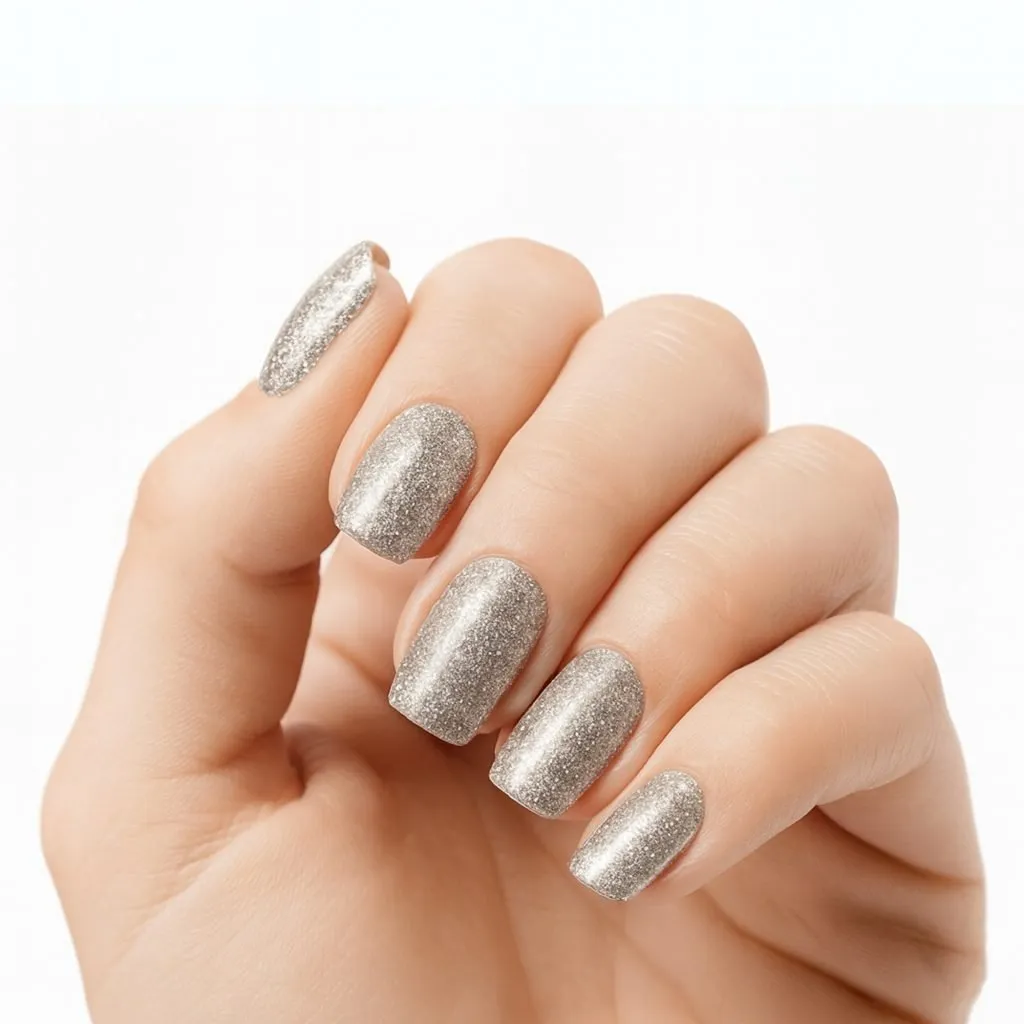
Fine shimmer scatters the light, so ridges disappear into the sparkle. See Champagne Sparkles for the full details.
Horizontal ridges: the kind to take seriously
Grooves running side to side across the nail, sometimes called Beau's lines, are different. They mark a pause in nail growth, and that pause can have a range of causes, so they're worth getting checked rather than guessed at. A single groove that grows out and doesn't come back is often just history; recurring or deep grooves across several nails are a conversation for your GP, not a beauty blog, and we'd rather say so plainly.
When it's not a beauty question: see a pharmacist or GP about horizontal grooves across several nails, ridges that appear suddenly alongside colour changes or lifting, or any nail change that worries you. Fine vertical lines that have crept in gradually over years are the common kind.
Common questions
Are vertical ridges in nails normal?
Usually, yes. Fine lines running from cuticle to tip are a common texture change that tends to become more visible with age and dryness, a bit like fine lines on skin, and they are mostly cosmetic.
What is the difference between vertical and horizontal nail ridges?
Vertical ridges run from root to tip and are common and generally harmless. Horizontal grooves run side to side and mark a pause in nail growth, so they are worth showing to a pharmacist or GP, especially if they come back or affect several nails.
Can I put gel nail strips over ridged nails?
Yes, and it is the quickest way to smooth the look: the cured gel layer gives a smooth surface for up to 14 days. Shimmer and pearl finishes hide texture best.
Does buffing remove ridges?
It can soften how they look, but buffing removes nail, and done often or firmly it thins and weakens the nail. Buff rarely and lightly, and rely on moisture plus a smoothing layer on top instead.
Velvora is a UK brand selling semi-cured gel nail strips, nail polish strips and nail care online. Gel sets are HEMA free and TPO free, and orders over £35 ship free anywhere in the UK. Start with the getting started guide or browse the gel nail strips collection.
Related reading: strengthening weak nails and gel nail strips and nail health.
Like our nail guides?
Add Velvora as a preferred sourceGoogle shows preferred sources more often in Search, AI Overviews and AI Mode. It takes one tap and you can undo it any time in your Google settings.