
Blog · 24 March 2026 · Updated 12 October 2026
Why Do Gel Nail Strips Peel After 1 Day? Fixes That Work
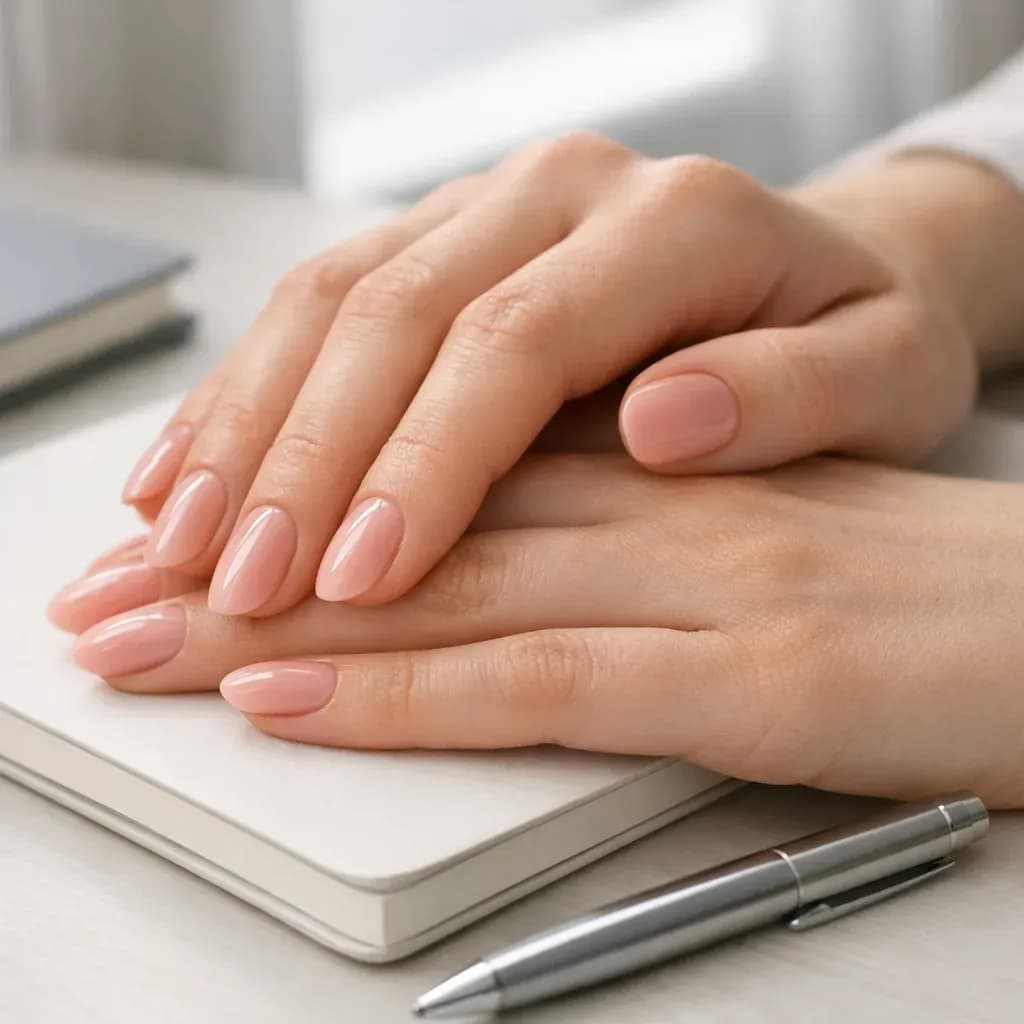
Gel nail strips that peel after 1 day are almost always down to prep, fit or curing, not "bad nails". The usual culprits are oil or cuticle film on the nail, a strip that touches the skin, or edges that weren't fully cured and sealed. Fix those three and your next set can last up to 14 days.
The good news is that the fixes are small. Most of them happen in the first few minutes of application, in the bits you can't see, like clearing cuticle film and capping the tips.
Before you troubleshoot, it's worth browsing the full Velvora gel nail strips collection to compare finishes (solid, French tip, glitter) and choose a style that suits your routine. A gel set is £11.99 at full price, with free UK delivery on orders over £35.
Why do gel nail strips peel after 1 day? The most common causes
Gel nail strips peel after 1 day when the bond is interrupted at the base, meaning the strip is sticking to oil, moisture, cuticle film or skin instead of a clean, dry nail.
- Cuticle film on the nail: a thin, almost invisible layer of skin on the nail stops the strip gripping.
- Oil or hand cream left on the nails: even hands that feel dry can carry skincare residue that weakens the bond.
- Wrong size (too big): a strip wider than your nail sits on skin at the sidewalls, and that edge lifts fast.
- Strip touching the cuticle: if the strip overlaps onto skin, it lifts as your skin moves.
- Under-curing (or curing in a shadow): semi-cured gel needs a full UV or LED cure to set at the edges.
- Water or heat in the first few hours: hot showers, washing up or a steamy bath can soften edges before they've settled.
A very common pattern: the set looks perfect, then one corner pops up the next morning. That's almost always an edge-seal issue, or a strip placed a touch too close to the cuticle.
Quick self-check: where is the peel starting?
Where the lift starts tells you the cause. Spot where it begins and you can fix it in one go.
| Where it lifts | Most likely cause | Best fix |
|---|---|---|
| At the cuticle | Strip placed too close, or cuticle film left on the nail | Leave a hairline gap, push back cuticles and clean the nail |
| Sidewalls (sides of the nail) | Strip too wide and touching skin | Size down; keep a hairline gap from the skin |
| Free edge (tip) | Tip not capped, edge under-cured, or nails used as tools | File downwards to seal; cure again; avoid picking |
| Whole strip lifts cleanly | Oil or moisture on the nail; not enough prep | Wash, dry fully, wipe the nail clean and reapply |
Prep mistakes that cause gel nail strips to peel after 1 day (and how to fix them)
The number one reason gel nail strips peel after 1 day is incomplete prep, because nails naturally hold oil and moisture.
1) You didn't fully remove cuticle film (the invisible barrier)
In our own wear tests, the biggest difference between a one-day peel and 10 to 14 days of wear is whether the nail is genuinely clear of cuticle film. Push back your cuticles, then gently remove the film on the nail itself (not your skin). The aim is a clean nail, not sore cuticles.
For a step by step, follow the Getting Started guide, which covers prep in the order that works.
2) You moisturised right before applying (or forgot hand sanitiser residue)
Hand cream, SPF, cleansing balm and even some sanitisers leave emollients behind. If you've done your skincare first, wash your hands again and dry thoroughly. Keep cuticle oil for after application, not before.
Once you've finished curing and you're happy with the seal, use an oil daily to keep nails flexible. Pen-style oils are mess-free; try the Watermelon Cuticle Oil Pen for on-the-go hydration.
3) You didn't dry your hands properly (water is the silent spoiler)
Water under the edge can break the bond quickly. Dry your hands, then wait a couple of minutes before applying. If you've just had a shower, give it at least 30 minutes, ideally an hour: nails absorb water and swell slightly, which can encourage lifting later as they dry and shrink back.
Application and sizing: the "too big" mistake that makes strips lift
If your strip is peeling at the sides within 24 hours, the quickest fix is usually a smaller size. A strip that sits just inside your sidewalls grips; one that overlaps the skin has nothing to hold on to.
Choose the right width (if in doubt, go smaller)
Pick a strip that covers the nail from sidewall to sidewall without touching skin. If you're between sizes, take the smaller one: a hairline of bare nail at the sides is invisible, while a strip on skin lifts within days. Each Velvora set includes 20 strips in mixed sizes, so most hands can find a close match without forcing it.
If sizing is confusing, use the nail sizing guide once and you'll fly through future sets. Our article on what to do when you're between sizes covers awkward thumbs and wide nails.
Leave a tiny gap at the cuticle
Place the strip with a hairline gap (about the thickness of a credit card edge) between strip and cuticle. This stops hair and skincare catching an edge and gives a cleaner, more salon-like look.
Seal the tip with a downward file
Don't saw back and forth. File downwards at the free edge to "cap" the strip. This one small move is a big part of why some people get up to 14 days while others get 1 to 3.
For the full method, see how to apply gel strips.
Curing issues: how to know if you under-cured (or over-cured)
Semi-cured gel strips need enough UV or LED light to set fully, especially at the edges. If you under-cure, the strip can feel fine at first but lift quickly at the tips or sides.
Signs you under-cured
- Edges feel slightly flexible or rubbery after curing
- Hair catches at the cuticle line
- Peeling starts at the free edge within 24 to 48 hours
What actually helps: consistent, even curing
Cure each hand for 60 seconds, and cure your thumbs separately, because they tend to sit at an angle under the light. Add 15 to 30 seconds for very dark or glittery shades.
If you're building your at-home kit, Velvora's mini lamp in the UV/LED lamp collection is £11, charges by USB-C and comes in blue or pink.
Can over-curing cause peeling?
It's less common, but a lot of extra curing can leave the edge feeling slightly brittle on very thin nails. If you suspect this, stick to the standard timings and focus on better prep and sealing rather than adding extra cures.
Real-life habits that sabotage day-1 wear (even with perfect prep)
Yes, your routine matters. Even a perfect application can lift early if the first few hours are rough on your hands.
- Hot water straight after applying: try to avoid washing up or a long shower for 2 to 3 hours.
- Using nails as tools: opening cans, scratching labels and lifting stickers all start tiny lifts at the tip.
- Frequent hand sanitiser: some formulas are very drying and can tempt you to pick at edges.
- Hair wash day: if you can, apply strips after you wash your hair, not before.
A tip from our own testing: if you're prone to lifting, do a quick edge check after your first cure. Press the strip down firmly along the cuticle line and sidewalls, then cure once more. It's a small step that makes a real difference for day-one peelers.
If you want to refresh your kit, the Velvora Gel Nail Strips Starter Kit gives you two sets of your choice, a cuticle oil pen and the mini UV/LED lamp. When you're ready, browse the full Velvora range.
How to fix a peeling gel nail strip without starting over
If a corner is lifting, you can often save the set if you act early. If the strip is lifting widely or has trapped hair or fluff, it's usually better to replace that nail.
For a small corner lift
- Clean and dry the nail (no oil or cream).
- Gently press the lifted edge back down.
- Cure again, making sure the lifted area is directly under the light.
- File downwards at the tip to re-seal.
If several nails are peeling on day 1
That points to prep (oil, moisture or cuticle film) rather than a one-off knock. Removing and reapplying will give a better result than curing again and hoping.
When you do remove them, don't rip. Add a few drops of cuticle oil round the edges, wait, then lift with a wooden stick and peel slowly. No acetone is needed. The full method is in how to remove gel nail strips safely at home.
Are gel nail strips safe if they keep peeling?
Peeling itself isn't a safety issue, but picking or ripping lifted strips can damage the top layer of your natural nail. The better approach is to remove them gently and reapply with better prep.
Velvora gel nail strips are HEMA free and TPO free, vegan and cruelty-free. For ingredient details, see product safety and ingredients.
Why choose Velvora for longer-lasting gel nail strips
Velvora is a UK brand for people who want salon-looking nails at home without the salon hassle. Our semi-cured gel strips are real gel, cured to around 80 per cent in production, so they finish hardening on your nail in 60 seconds under the lamp.
- Kinder formula choices: HEMA free and TPO free, vegan and cruelty-free.
- Realistic wear: up to 14 days on fingernails. In our own wear tests strips typically last 10 to 14 days, depending on lifestyle.
- Everything to fit: 20 strips in mixed sizes, plus a nail file and a manicure stick.
- Straightforward shopping: free UK delivery over £35, and 14 days to cancel most orders.
Common questions
Why do my gel nail strips peel off in one piece?
If a strip comes off in one piece, it never properly bonded to the nail. The usual reasons are oil or moisture on the nail, or cuticle film left on the surface. Reapply after thorough prep and leave a hairline gap at the cuticle.
Can I shower after applying gel nail strips?
Yes, but for the best wear avoid hot water for the first 2 to 3 hours after application. This gives the edges time to settle and reduces early lifting, especially at the tips.
Do gel nail strips need a lamp or can they air-dry?
Semi-cured gel nail strips need a UV or LED lamp to finish curing: 60 seconds per hand, thumbs separately. Air-drying won't harden the gel properly, which can lead to peeling within a day.
Why do my gel strips lift at the cuticle line?
Cuticle lifting usually comes from placing the strip too close to the cuticle or leaving cuticle film on the nail. Push back your cuticles, clean the nail, then apply with a hairline gap so hair and skincare can't catch the edge.
Will cuticle oil make my gel nail strips peel?
It can if you use it before application, or flood the cuticle line straight after. Use oil once you've finished curing and sealing the edges, then apply it daily round the skin to keep nails and cuticles flexible.
For the easiest route to longer wear, choose a style you'll actually leave alone (no picking) and set yourself up with the right tools. Explore gel nail strip starter kits, then shop now for your next set.
Note: if you notice persistent nail splitting, pain or changes in nail colour, speak to a pharmacist or GP. The NHS overview on brittle nails and common causes is a helpful starting point.
Like our nail guides?
Add Velvora as a preferred sourceGoogle shows preferred sources more often in Search, AI Overviews and AI Mode. It takes one tap and you can undo it any time in your Google settings.